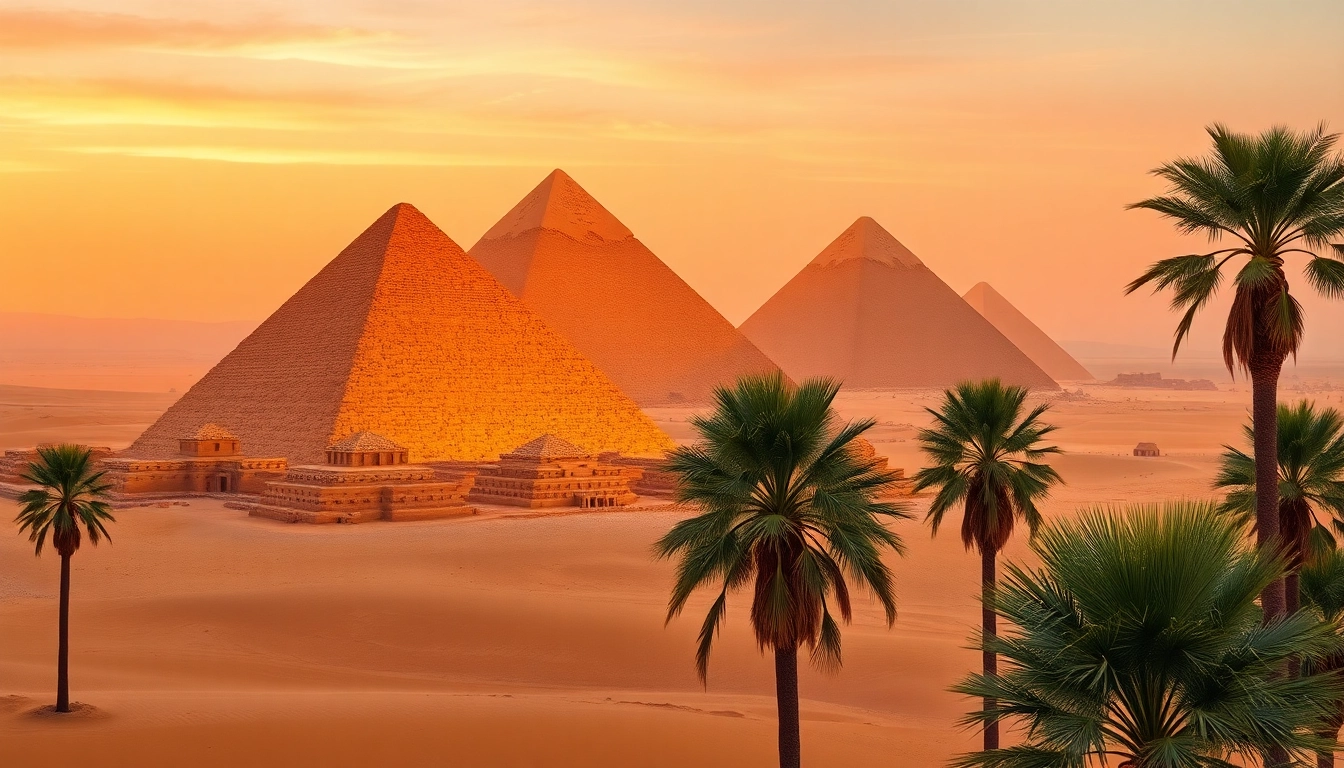
Introduction to Pyramids
Pyramids have captivated human imagination for centuries, standing as monumental testaments to the ingenuity and ambition of ancient civilizations. Particularly noted for their majestic construction in Egypt, these structures serve not only as architectural feats but also as important cultural symbols, encapsulating religious beliefs and societal values of their time. From the Great Pyramids of Giza to lesser-known sites, the importance of piraminds extends beyond mere stone and mortar; they are pivotal points in our understanding of history and human evolution.
What Are Pyramids?
Pyramids are geometric structures with a square or triangular base converging to a single point at the top. They often have a majestic appearance and are usually associated with ancient burial practices, especially in Egypt, where they were constructed as tombs for pharaohs. The design of the pyramid symbolizes the pharaoh’s ascent to the heavens and embodies the connections between the Earth, the cosmos, and the divine.
Historical Context of Pyramids
The history of pyramids dates back to ancient Egypt, around 3000 BC when the need for dignified burial practices emerged among the elite. The transition from mastabas (flat, rectangular tombs) to more complex pyramid structures reflected advancements in engineering and society's evolving religious beliefs. The Third Dynasty marked a significant turning point, birthing the Step Pyramid of Djoser, which later culminated in the iconic Pyramids of Giza during the Fourth Dynasty.
Cultural Significance of Pyramids
Pyramids serve as a nexus of cultural significance, embodying the values and beliefs of the societies that constructed them. They were intricately linked to the concept of the afterlife, representing a link between the living and the divine. Through various rituals, including the mummification process, Egyptians believed that the deceased could transition to the afterlife, aided by the monumental tombs that housed their physical remains and accompanied treasures.
Architectural Marvels
Design and Structure of Pyramids
The design of pyramids showcases intricate mathematical precision and architectural ingenuity. The most renowned, the Great Pyramid of Giza, spans about 13 acres and stands approximately 480 feet high. Its structure consisted of around 2.3 million blocks of stone, each weighing several tons—displaying unparalleled engineering skills of its builders.
Construction Techniques Used in Pyramids
The construction of pyramids involved a combination of skilled labor, innovative techniques, and immense resources. Workers, often believed to be skilled craftsmen rather than slaves, employed a systematic approach involving leveling, aligning, and transporting massive stones. Recent discoveries indicate the use of ramps and levers, along with efficient organization of labor to optimize productivity.
Architectural Variations of Pyramids
Pyramids are not uniform in structure or design; variations arise based on geographical and cultural contexts. The Egyptian pyramids differ from Mesoamerican pyramids, which often have platforms and staircases leading to temple-like structures at their summits. Nubian pyramids, characterized by their steeper angles and smaller footprints, further illustrate the diversity in pyramid architecture.
Mythology and Beliefs
Myths Surrounding Pyramids
From the perspective of ancient Egyptians, pyramids were deeply intertwined with mythology. According to Egyptian beliefs, these structures were not merely burial sites but gateways to the afterlife, offering the deceased a safe passage to the heavenly realm governed by the sun god Ra. Various texts, including the Pyramid Texts, elaborate on the significance of these monumental structures, recounting tales of resurrection and divine judgment.
Religious Significance of Pyramids
Pyramids are central to understanding the religious practices of ancient Egypt. They served not only as tombs but also as focal points for worship and offerings. The architecture itself was imbued with religious symbolism, often aligned with cardinal directions, celestial bodies, and significant astronomical events. The pyramidal shape represented the rays of the sun, further tying the structures into the broader cosmological beliefs held by the ancient Egyptians.
Impact on Afterlife Beliefs
The presence of pyramids reinforced the Egyptians' strong belief in the afterlife. The elaborate burial practices, combined with the treasures placed in the tombs, were intended to ensure a prosperous life after death. Additionally, the concept of 'Ma'at', representing truth and cosmic order, heavily influenced how pyramids were constructed and viewed as embodiments of these values.
Tourism and Modern Relevance
Pyramids as Tourist Attractions
Today, pyramids serve as significant tourist attractions, drawing millions from around the world. The allure of the pyramids lies not only in their architectural grandeur but also in the historical mystery and cultural heritage they represent. The Great Pyramid of Giza, in particular, is one of the Seven Wonders of the Ancient World and remains a point of fascination for both scholars and tourists alike.
Preservation Efforts for Pyramids
Preserving these ancient structures is crucial for educational and cultural continuity. Various international organizations and local governments collaborate on efforts to maintain and restore pyramids. The unique environmental challenges, including erosion and tourism impacts, necessitate continuous research and monitoring to ensure the longevity of these historic sites.
Current Research on Pyramids
Scholars and archaeologists continue to explore the mysteries of pyramids, employing modern technology to uncover hidden chambers and understand construction techniques better. Advancements in imaging and surveying technologies have revealed new insights, including the potential for undiscovered rooms in existing structures. This ongoing research is vital for reconstructing the intricate history and cultural significance of these ancient wonders.
FAQs About Pyramids
How old are the pyramids?
The pyramids, particularly those at Giza, were built around 2600 BC, making them one of the oldest monumental structures in existence.
Why were the pyramids built?
Pyramids were built as monumental tombs for pharaohs, reflecting their beliefs in the afterlife and the desire to provide them with an eternal resting place.
How many pyramids exist in Egypt?
There are over 130 pyramids recorded in Egypt, with the most famous located in the Giza plateau, including the Great Pyramid of Khufu.
What is inside the pyramids?
Pyramids often contained burial chambers filled with treasures, mummified remains, and grave goods to assist the deceased in the afterlife.
Are there other pyramids outside Egypt?
Yes, notable pyramids exist outside Egypt, including the Mesoamerican pyramids in Mexico, such as those at Teotihuacan and Chichen Itza.